The motor is the driving force behind every drone. It spins the propellers to generate the lift and thrust needed for takeoff, hovering, maneuvering, and forward flight. Without a motor, a drone cannot get off the ground or maintain stable flight.
Because motors directly influence flight performance, selecting the right motor type is one of the most important decisions when designing a drone. Modern unmanned aerial vehicles (UAVs) use different motor technologies to meet specific performance requirements, with factors such as torque, speed, efficiency, weight, and response time all playing a role in motor selection.
This article explores the most common types of motors used in drones, explains how they work, and highlights the applications where each motor design performs best.
Types of Drone Motors Classified by Drive Method
Brushed Drone Motors
Brushed motors are one of the simplest types of electric motors used in drones, but they are now mostly found in low-cost, toy-grade, and entry-level UAVs. They use carbon brushes and a commutator to transfer current to the rotating armature, generating the motion needed to drive the propeller.
Their simple design and low cost make them suitable for basic drone applications. However, because the brushes wear over time, brushed motors generate more heat, require more maintenance, and are less efficient than brushless alternatives. As a result, brushed motors are rarely used in modern commercial or industrial drones.
Brushless DC (BLDC) Motors
Brushless DC (BLDC) motors are the most widely used motors in modern drones. Unlike traditional brushed motors, BLDC motors use electronic commutation instead of mechanical brushes to switch current through the motor windings. This eliminates one of the primary wear components found in brushed designs, resulting in longer service life, improved reliability, and reduced maintenance.
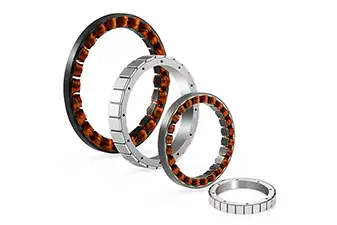
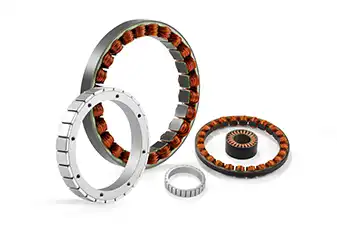
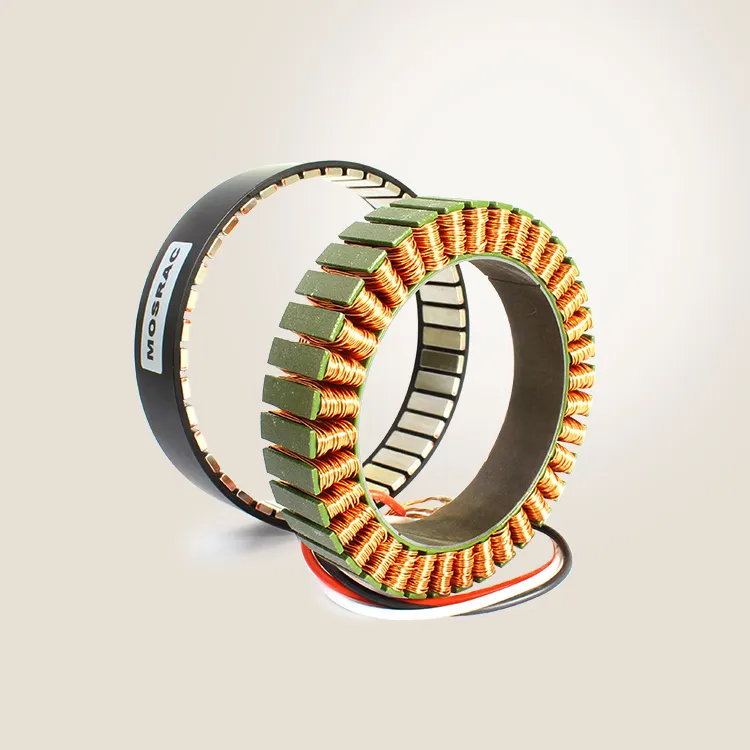
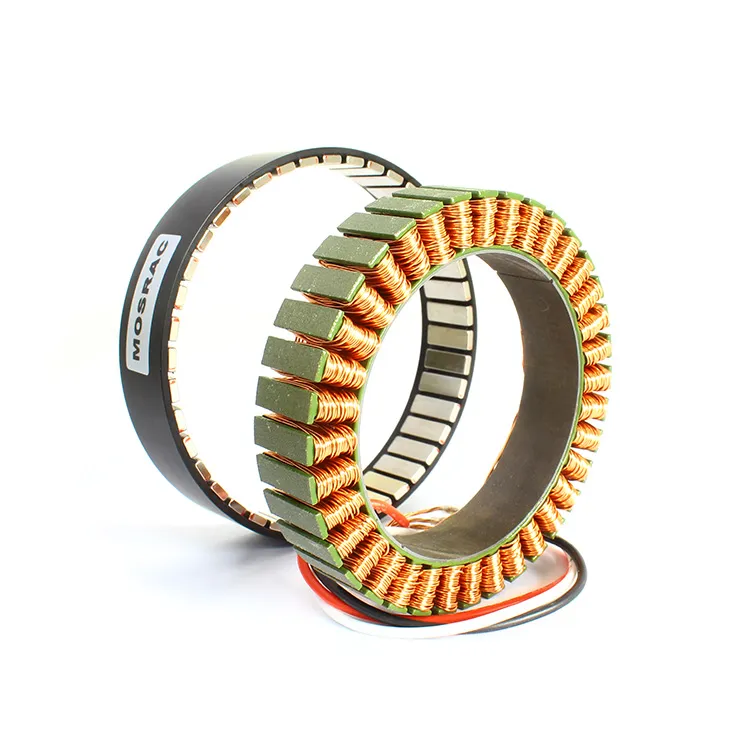
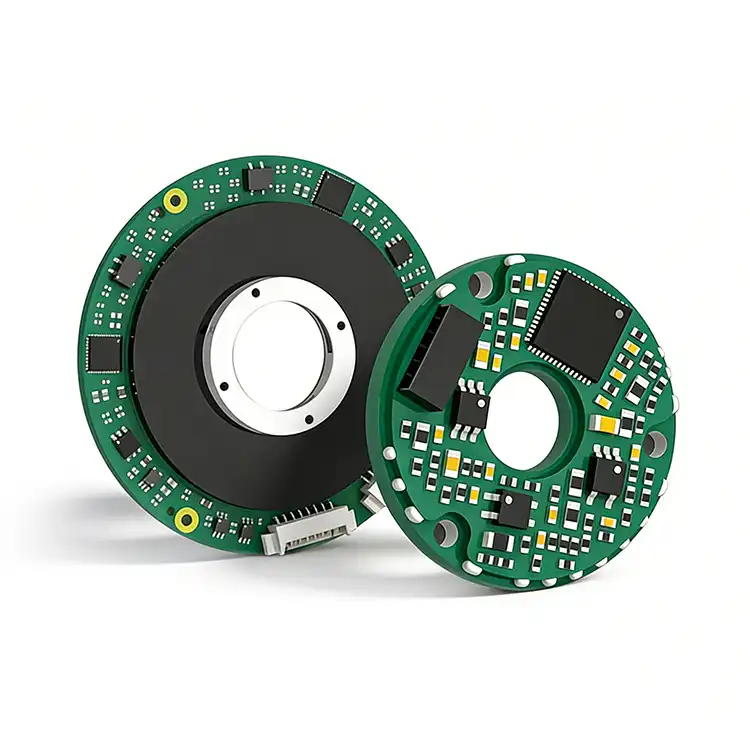
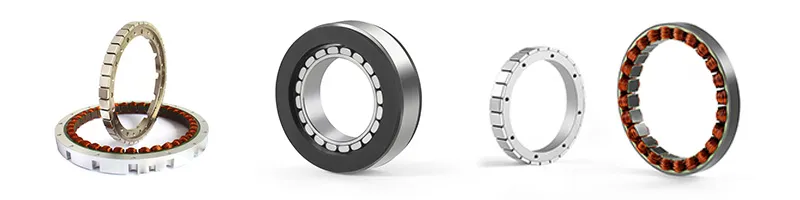
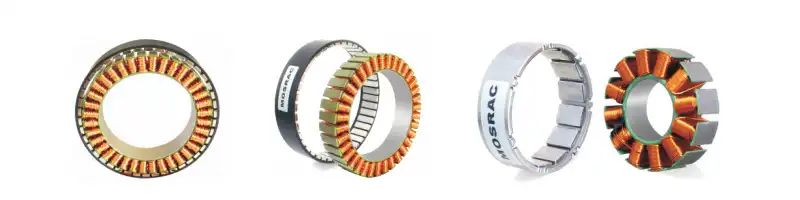
A BLDC motor consists of a stationary stator with copper windings and a rotor fitted with permanent magnets. An electronic speed controller (ESC) regulates current through the stator windings, creating a rotating magnetic field that drives the rotor while precisely controlling speed and torque.
BLDC motors are widely used in drone propulsion systems because they offer high efficiency, an excellent power-to-weight ratio, and reduced heat generation. They are also commonly used in gimbal stabilization and other precision motion applications that require smooth, responsive control.
Compared with brushed motors, BLDC motors provide:
Higher efficiency
Greater power density
Longer operational life
Reduced mechanical wear
More precise speed and torque control
Quieter operation
These advantages have made BLDC motors the industry standard for most commercial and industrial drone applications.
Permanent Magnet Synchronous Motors (PMSMs)
Permanent Magnet Synchronous Motors (PMSMs) are another motor technology commonly used in drone systems. Like BLDC motors, PMSMs use permanent magnets in the rotor and electronic commutation rather than mechanical brushes. This brushless design provides high efficiency, low maintenance requirements, and precise electronic control.
While BLDC motors and PMSMs share many similarities, they differ primarily in the way they are driven electronically. Both rely on an ESC to regulate current through the motor windings, allowing the flight controller to adjust speed and torque in real time. BLDC motors typically use trapezoidal wave commutation, while PMSMs use sinusoidal commutation. This allows PMSMs to produce smoother torque with less vibration and noise, making them well suited to applications that require highly precise and stable motion.
PMSMs are selected for many of the same reasons as BLDC motors. Their high power density enables designers to achieve greater performance without significantly increasing weight, while their efficient operation helps extend flight time by making better use of available battery power. Their ability to deliver smooth, controlled torque also contributes to stable maneuvering during takeoff, hovering, and directional flight.
Drone Motors by Rotor Configuration
Outer-Rotor Motors
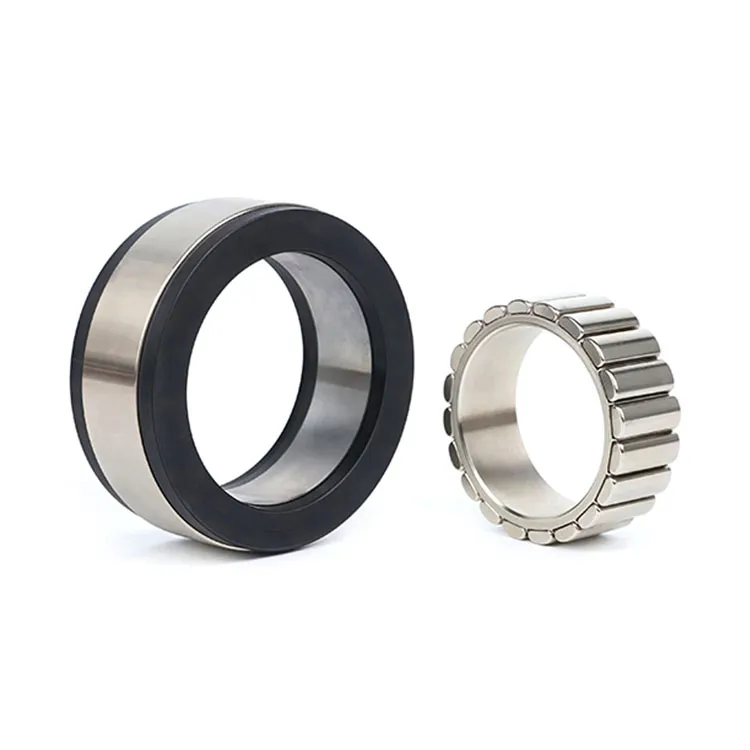
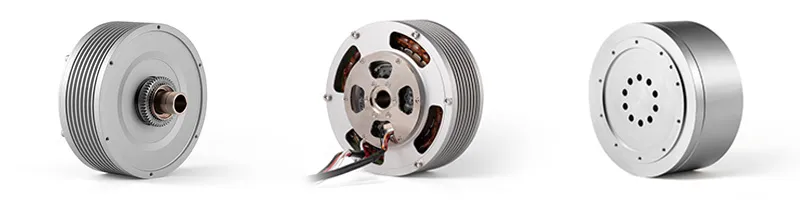
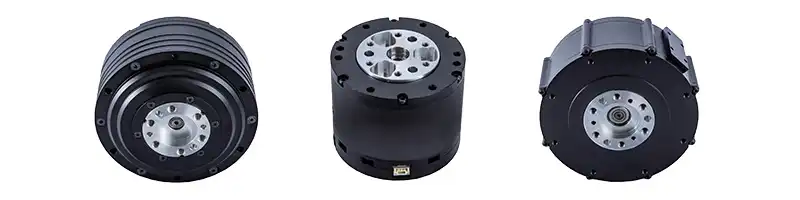
Outer-rotor motors are the most common motor configuration used in drone propulsion systems. In this design, the rotor rotates around the outside of the stationary stator, allowing the propeller to mount directly to the rotating outer housing. This arrangement simplifies the mechanical design by eliminating the need for additional couplings or shaft extensions.
One of the main advantages of an outer-rotor motor is its ability to produce high torque at relatively low rotational speeds. The larger rotor diameter increases the leverage acting on the motor, making it particularly effective for driving propellers that require strong, consistent thrust. As a result, outer-rotor motors have become the preferred choice for many multirotor drones and vertical take-off and landing (VTOL) aircraft.
Although outer-rotor motors generally have higher rotational inertia than inner-rotor designs, this is rarely a disadvantage in propulsion systems. The propeller itself already contributes significant inertia, and maintaining smooth, efficient thrust is typically more important than achieving extremely rapid acceleration. For these reasons, outer-rotor motors are widely used in applications where reliable lift, efficient propulsion, and stable flight performance are priorities.
Inner-Rotor Motors
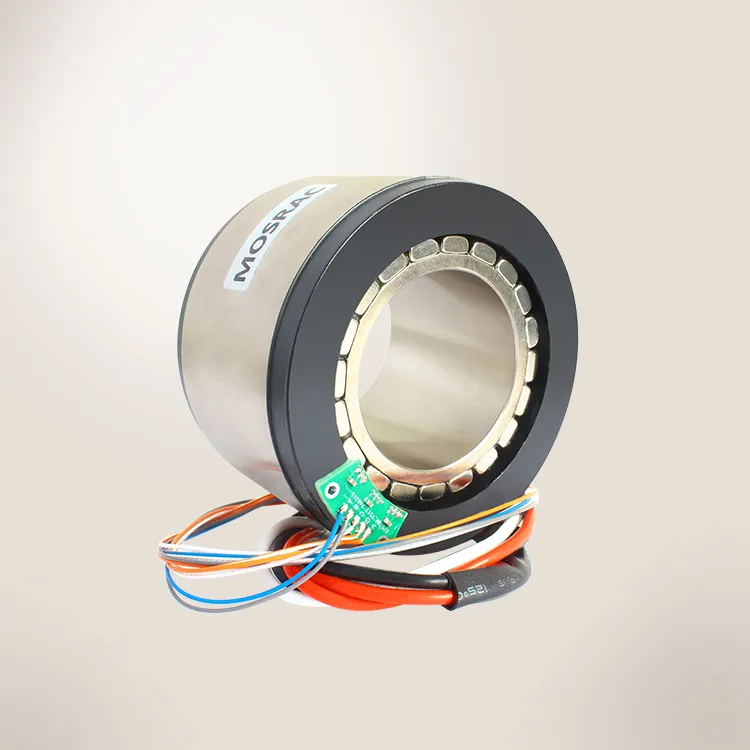
Unlike outer-rotor designs, inner-rotor motors position the rotor inside the stationary stator. This creates a smaller rotating mass, allowing the motor to accelerate and decelerate more quickly. The lower inertia makes inner-rotor motors ideal for applications that demand fast, precise movements rather than continuous thrust.
In drone systems, inner-rotor motors are most commonly used in camera gimbals and other stabilization mechanisms. These systems must continuously compensate for aircraft movement to keep cameras, LiDAR units, radar systems, and other payloads accurately aligned during flight. Even small disturbances can affect image quality or sensor performance, making rapid motor response essential.
Because of their fast dynamic response, inner-rotor motors can quickly adjust position to maintain stable payload orientation. Their ability to deliver smooth motion also helps minimize vibration and improve image stabilization, which is particularly important for aerial photography, surveying, and inspection applications.
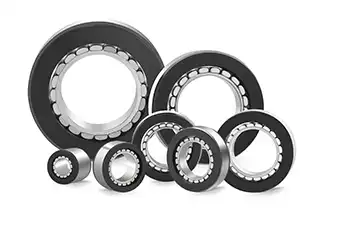
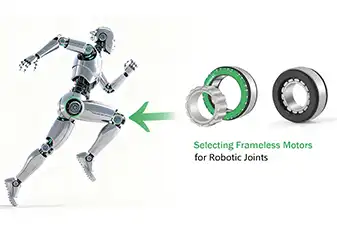
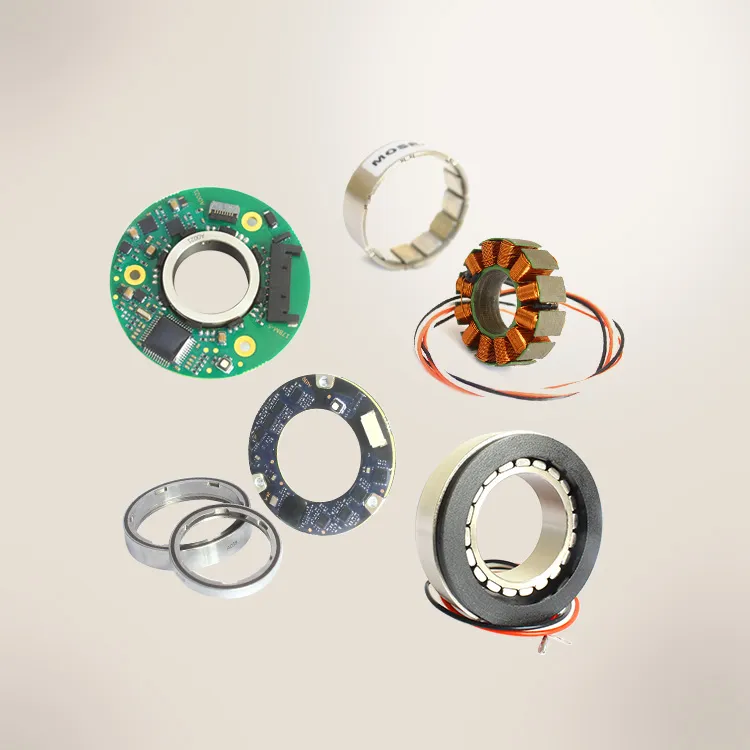
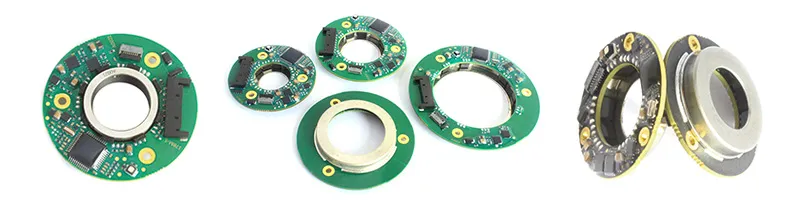
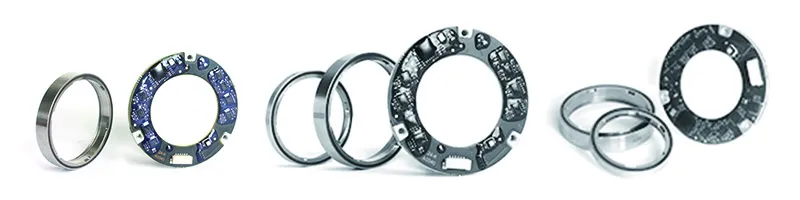
Inner-rotor motors are also commonly available in frameless designs. Rather than being supplied with a complete housing, the motor components can be integrated directly into the equipment's existing mechanical structure. This reduces size and weight while providing greater flexibility when designing compact UAV payload systems.
Selecting the Right Motor for a Drone Application
Selecting the right motor involves more than simply choosing the most powerful option. Every drone application has unique performance requirements, and the motor should be matched to the aircraft's intended function.
Propulsion Systems: Here, engineers typically prioritize high efficiency, reliable continuous operation, and sufficient torque to drive the selected propeller. This is why outer-rotor BLDC motors and PMSMs are commonly used in multirotor and VTOL platforms, where efficient thrust generation is essential for stable flight.
Stabilization Systems: Stabilization systems place different demands on the motor. Camera gimbals and sensor positioning systems require rapid response, smooth torque output, and precise control to compensate for aircraft movement. In these applications, inner-rotor motors are often preferred because their lower rotational inertia allows them to react more quickly to changing conditions.
Engineers must also consider factors such as available installation space, aircraft weight, battery capacity, and overall system integration.
Need Help Choosing the Right Drone Motor?
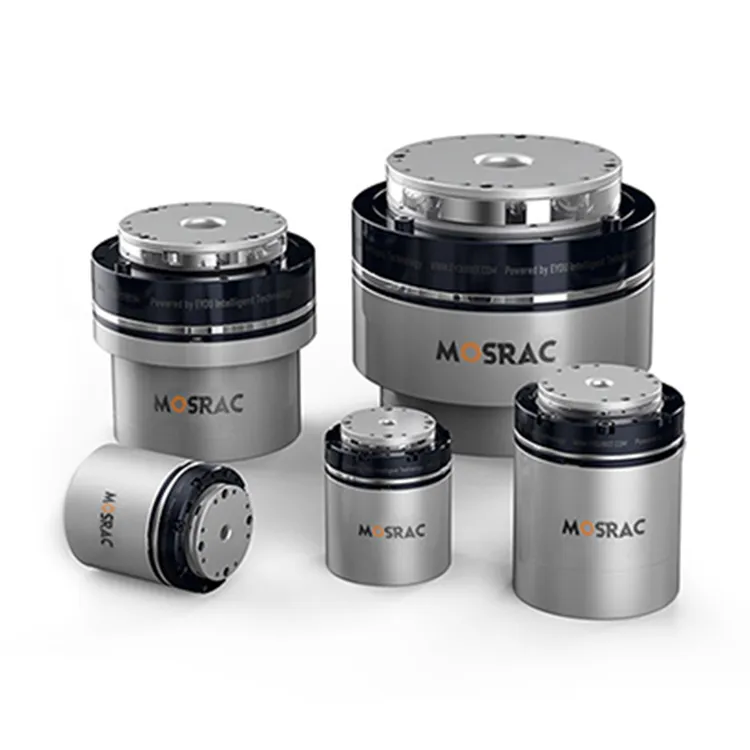
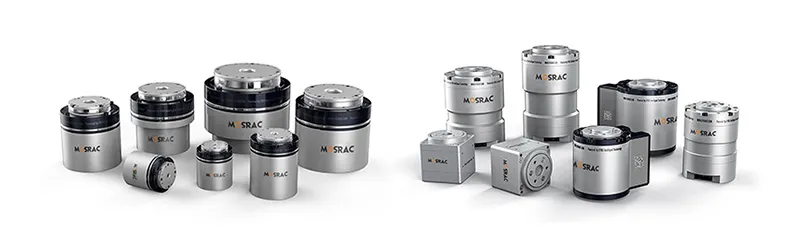
Selecting the right motor is essential for achieving the performance and efficiency your UAV requires. Whether you're designing a multirotor drone, VTOL aircraft, or precision gimbal system, Mosrac can help you identify the best motor solution for your application.
Contact the Mosrac team to discuss your project or explore our range of high-performance motors designed for demanding drone and UAV applications.