Robot arm motors are what give robotic systems their movement, precision, and control. But not all robotic motors work the same way. Different motor types offer different strengths when it comes to precision, speed, torque, efficiency, and responsiveness. Choosing the right motor can have a major impact on how the robotic arm performs, how accurately it moves, and how reliably it operates over time.
In this guide, we’ll explore the most common motors used in robotic arms, how they work, their strengths and limitations, and how to choose the right option for your application.
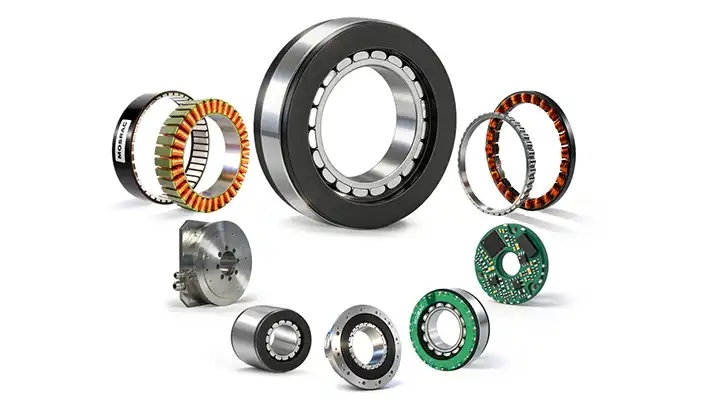
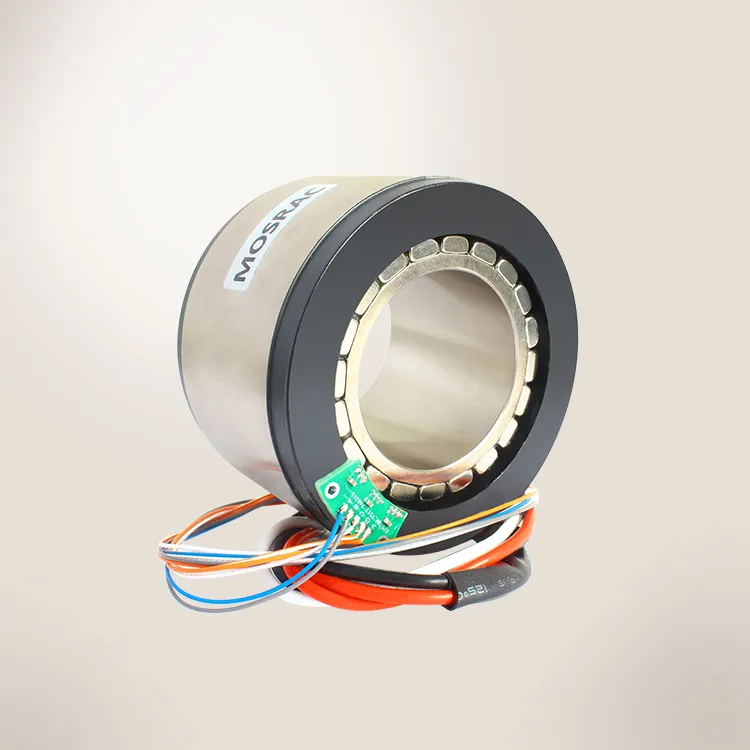
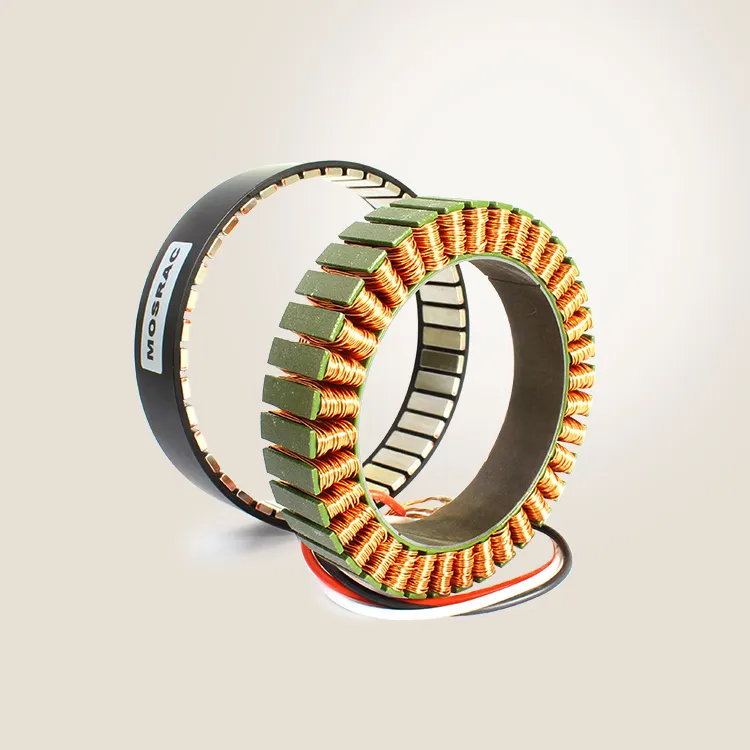
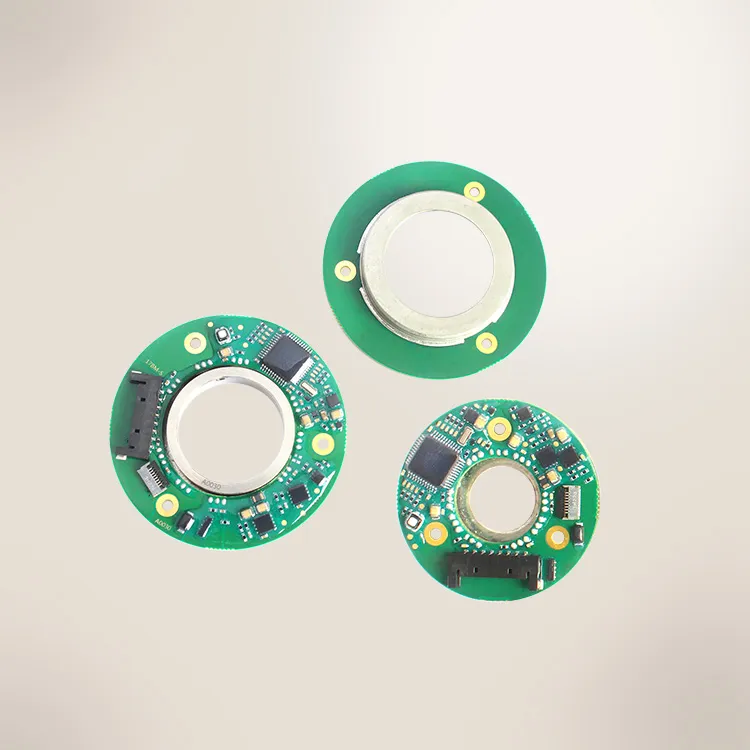
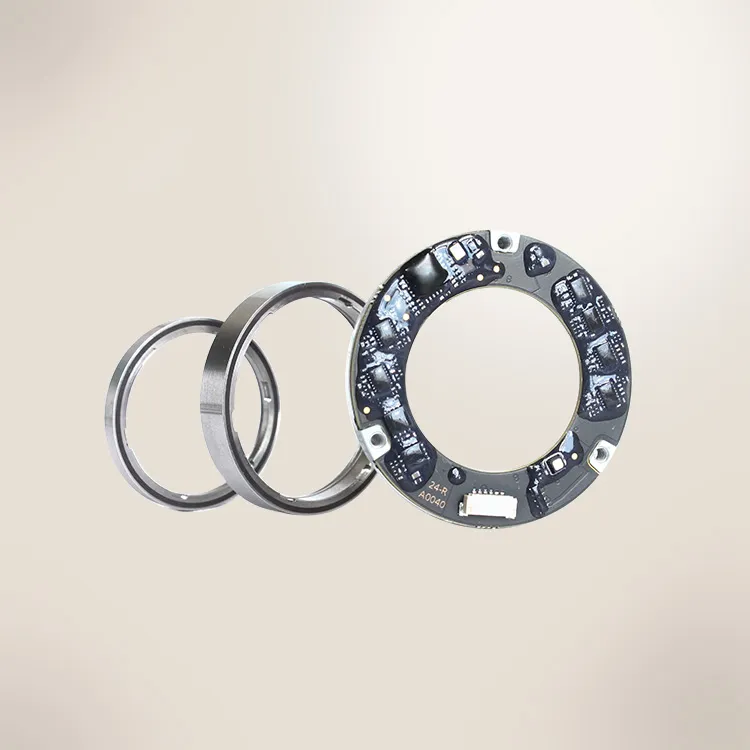
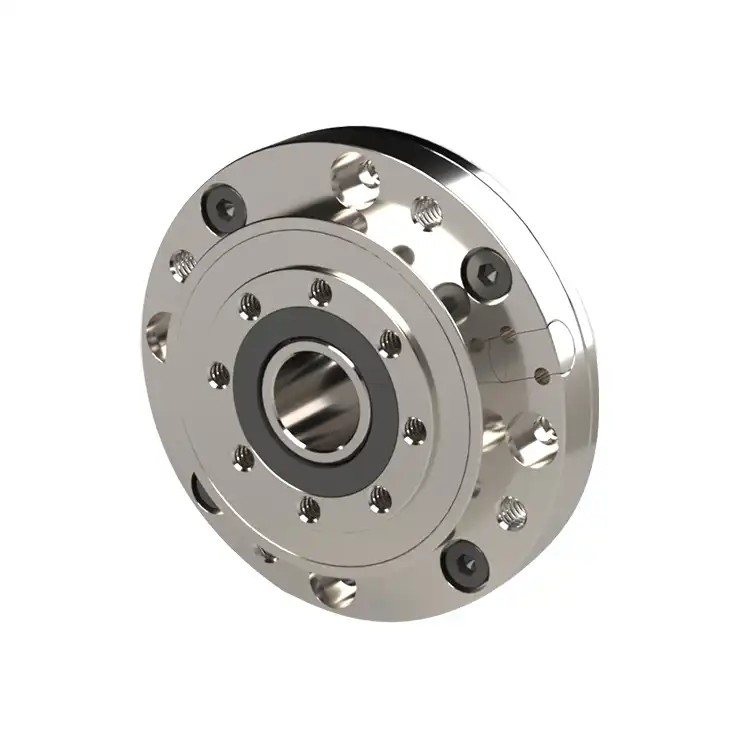
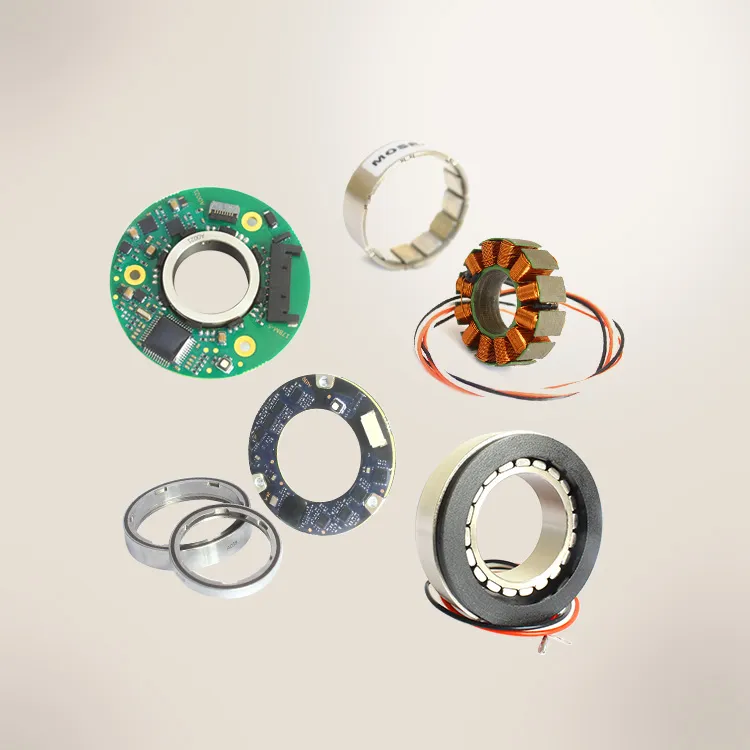
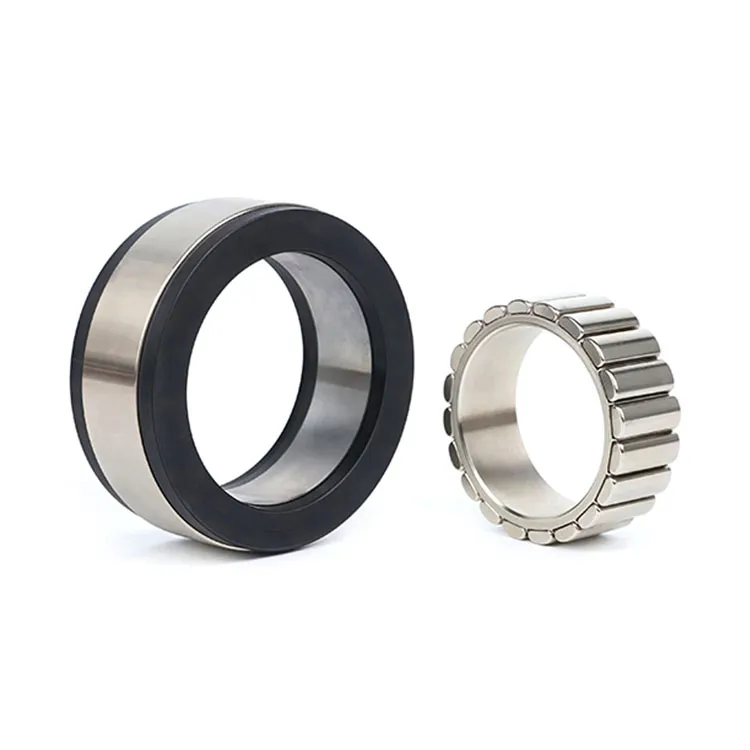
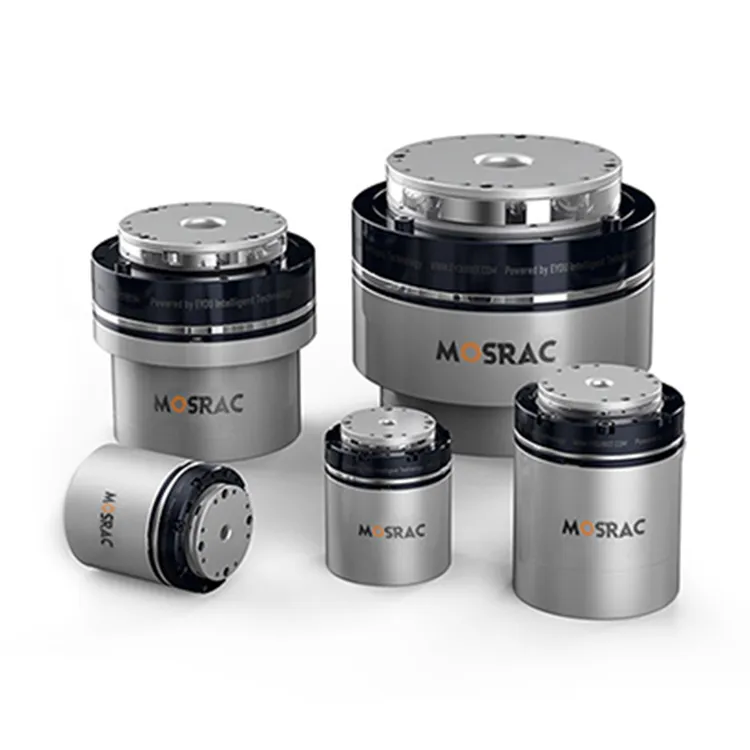
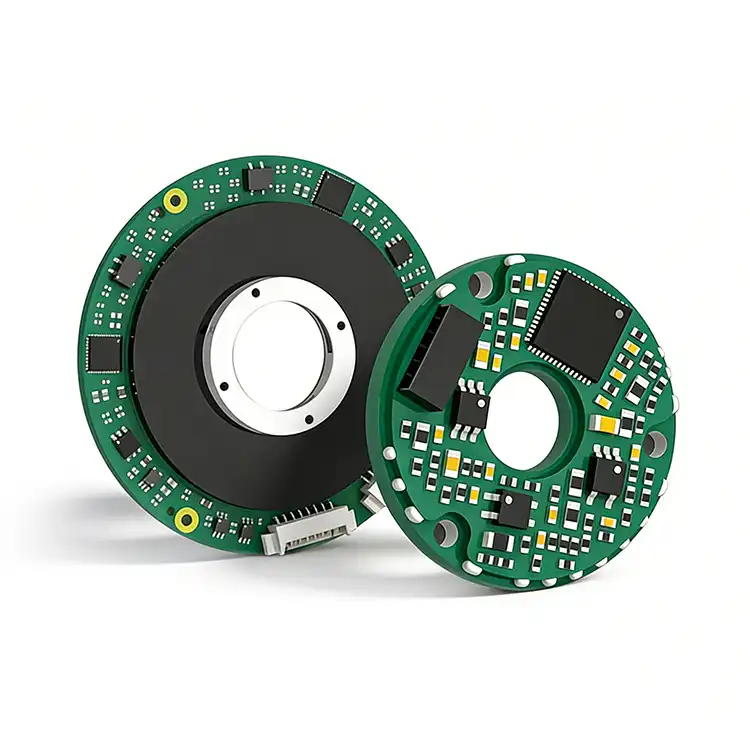
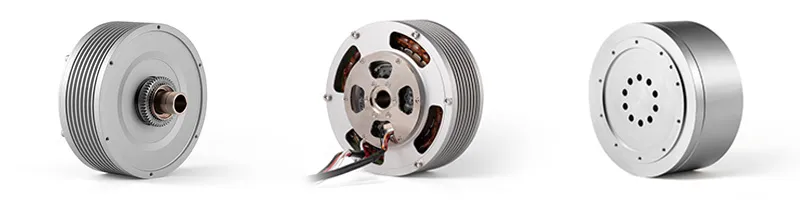
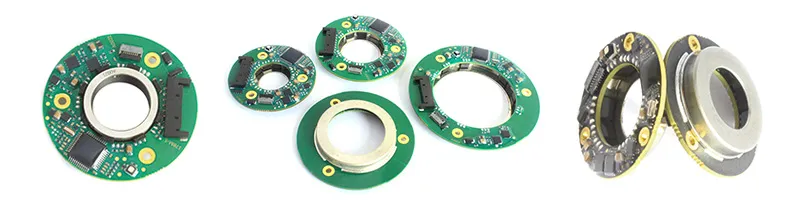
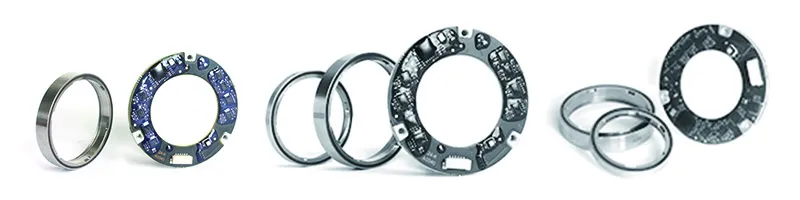
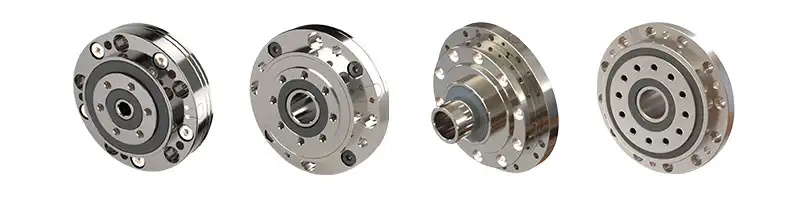
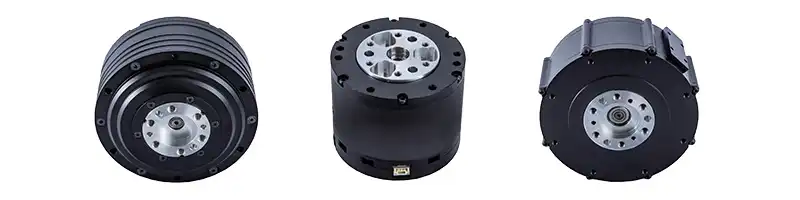
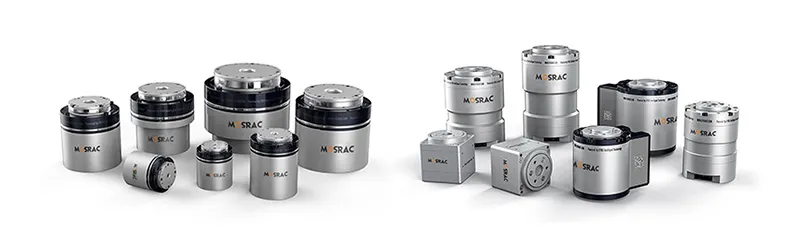
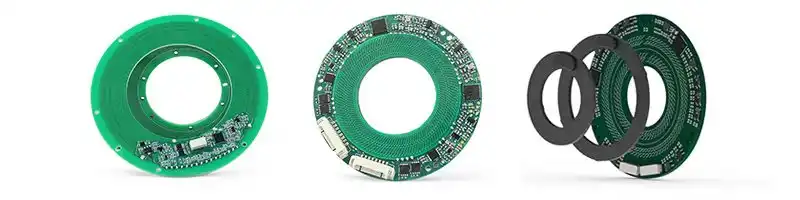
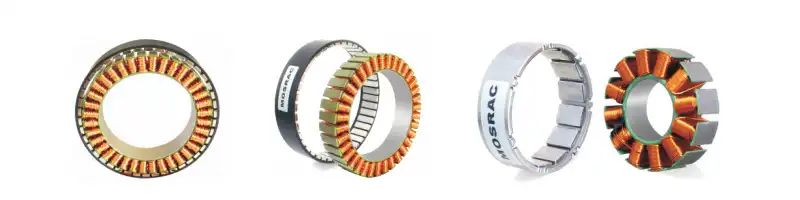
Robot Arm Motors (Frameless BLDC Torque motor) - Complete Joint Motor Solutions
What Are Robot Arm Motors?
Robot arm motors are the components that drive movement in each joint of a robotic arm. These motors, or electromechanical actuators, convert electrical energy into controlled mechanical motion. This is what allows the robotic arm to rotate, lift, extend, and position itself.
Understanding How Arm Robot Motors Work
Robotic arm motors, unlike other motors, are designed for highly controlled, multi-axis movement. Each motor is typically assigned to a specific joint, such as the base, shoulder, elbow, or wrist, and must work in coordination with the others to produce smooth and accurate motion. With these motors, it’s not just about how much force they can produce, but also how well they can control that force. In robotics, it’s not enough for a motor to simply move something from point A to point B. It needs to do it accurately, smoothly, and the same way every single time.
In many applications, even small positioning errors are not acceptable. For example, if a robot is assembling components or performing precise tasks, it needs to stop in exactly the same position repeatedly. To achieve this, the motor has to respond quickly to commands, stay stable while carrying a load, and constantly adjust its movement using feedback from sensors. This is what allows the motion to feel controlled rather than jerky or inconsistent.
Why Robot Arm Motors are Different From Other Motors
Robot arm motors operate in a much more dynamic and demanding environment than motors used in simpler applications such as fans, pumps, or conveyors. Instead of working under relatively steady conditions, they must deliver precise and responsive motion while loads, speeds, and torque requirements constantly change.
Key factors that make robot arm motors different include:
Constantly changing loads: The force required from each motor changes as the arm moves, extends, rotates, and carries different payloads.
Interconnected joint behavior: Every joint affects the rest of the system. A change at the base can alter the torque and motion requirements of the shoulder, elbow, and wrist.
System-level design requirements: Motors cannot be selected in isolation. Engineers need to consider how each motor interacts with the entire robotic arm.
High precision demands: In many applications, even very small positioning errors are unacceptable.
Fast response and stability: Motors must react quickly to commands while avoiding overshoot, vibration, and unstable motion.
Consistent performance across operating conditions: The motor needs to maintain smooth and reliable motion under both light and heavy loads.
Importance of inertia and control accuracy: Low inertia and precise control help the robotic arm move more responsively and accurately.
What Motors Are Used in Robotic Arms?
Now that we’ve covered the basics of what a robotic arm motor is and what it does, let’s consider the different motors used for robot arms.
There are four key options when it comes to motors for robot arms: frameless, servo, stepper, and brushless DC (BLDC) motors. Each one has its own strengths, and the right choice depends on how the robot is expected to move, respond, and perform under load.
Frameless Motors for Robot Arms
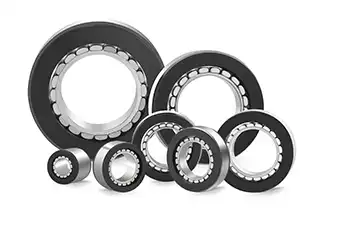
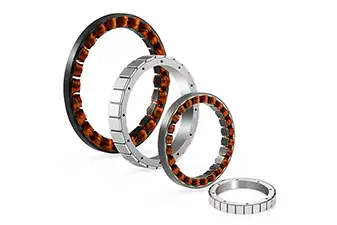
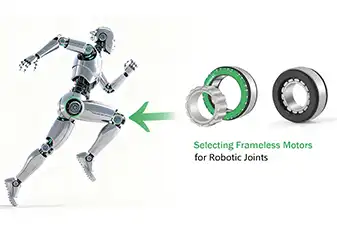
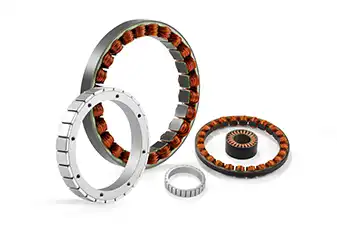
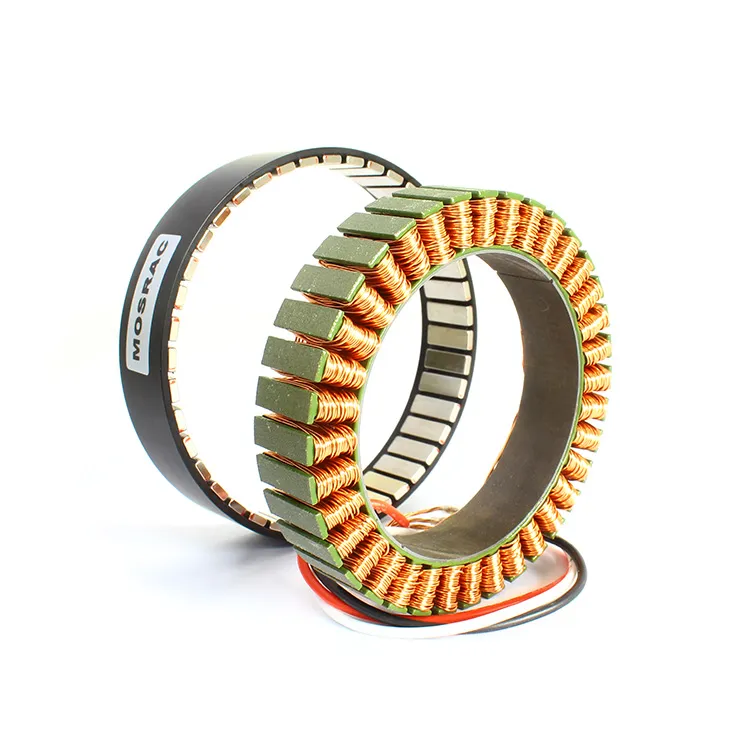
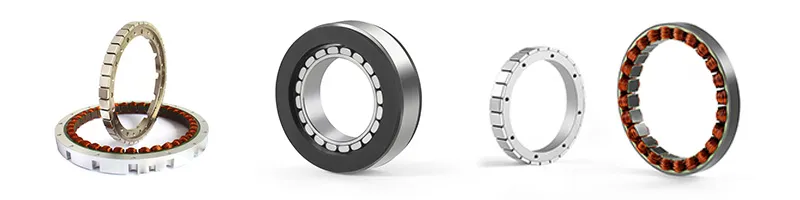
Frameless motors are designed very differently from traditional motors. Instead of coming as a complete enclosed unit with a housing, shaft, and bearings, frameless motors usually consist only of the rotor and stator. These components are integrated directly into the robotic joint itself. This design gives engineers much more flexibility and allows the robotic arm to be lighter, more compact, and more precise. Frameless motors are especially popular in direct-drive systems, where the motor drives the joint directly without using a gearbox.
One of the biggest advantages of frameless motors is their precision and smooth motion. Because there are fewer mechanical components between the motor and the joint, there is less backlash, less friction, and better responsiveness. This allows robotic arms to move more naturally and accurately. Another major advantage is torque density. Frameless motors can deliver high torque in a relatively compact package, which is extremely valuable in robotics where space is limited.
Servo Motors for Robot Arms
Servo motors are one of the most widely used motors in robotics because they are built specifically for controlled and accurate movement. What makes servo motors different is their closed-loop feedback system.
Inside a servo system, sensors constantly monitor the motor’s position and send feedback to the controller. The controller then makes continuous adjustments to ensure the motor moves exactly where it is supposed to. This is what gives servo motors their high precision and repeatability.
This constant feedback is incredibly important in robotic arms. In applications like industrial automation or medical robotics, the arm may need to repeat the same movement thousands of times with almost no variation. Servo motors are designed for exactly this kind of work. Servo motors are also very responsive. They can accelerate quickly, maintain stable motion under changing loads, and stop accurately without excessive overshoot or vibration. This makes them ideal for robotic systems that need smooth and reliable performance.
The downside is that servo systems are more complex and expensive than simpler motor types. They require controllers, feedback devices, and tuning to operate properly. However, for high-performance robotics, the added precision and control are often worth the extra cost.
Stepper Motors for Robot Arms
Stepper motors work differently from servo motors. Instead of rotating continuously, they move in small fixed increments called steps. Each electrical pulse sent to the motor causes it to rotate by a specific angle. This step-based movement makes stepper motors relatively easy to control because the system can estimate the motor’s position simply by counting steps. In many cases, they can operate without complex feedback systems, which helps reduce cost and system complexity.
Stepper motors are well known for their precision at lower speeds and their strong holding torque. Holding torque refers to the motor’s ability to maintain position when stationary, which can be useful in robotic systems that need to hold loads in place. Because they are simpler and more affordable, stepper motors are commonly used in educational robotics, smaller robotic arms, CNC systems, and 3D printers.
However, stepper motors also have some important limitations. They are generally not as smooth or responsive as servo motors, especially at higher speeds. They can also lose steps if overloaded, which means the motor may no longer know its exact position. In highly dynamic robotic systems, this can become a major issue.
As a result, stepper motors are often best suited for simpler applications where cost and straightforward control are more important than maximum performance.
Brushless DC (BLDC) Motors for Robot Arms
Brushless DC motors are widely used in modern robotics because they offer a strong balance between efficiency, speed, durability, and performance. Unlike traditional brushed motors, BLDC motors do not use physical brushes to transfer current. Instead, they rely on electronic controllers to manage the magnetic fields inside the motor. Removing the brushes reduces wear and friction, which helps improve efficiency and significantly increases lifespan. This is one reason why BLDC motors are so common in systems that need reliable long-term operation.
BLDC motors are also known for their smooth operation and excellent speed control. They can run at high speeds while maintaining good efficiency, making them useful in robotic joints, drones, and mobile robotic systems.
Another advantage is that BLDC motors can provide strong performance while remaining relatively compact and lightweight. When combined with advanced controllers and feedback systems, they can achieve highly precise motion and behave similarly to servo systems.
One limitation is that BLDC motors require more advanced electronic control compared to simpler DC or stepper motors. Without proper controllers and feedback systems, they may not achieve the same level of positioning accuracy as dedicated servo systems.
Key Requirements for Robotic Arm Motors
Robotic arm motors do much more than simply create movement. They play a major role in determining how accurately, smoothly, and efficiently the robotic arm performs. Different applications place different demands on the system, which is why choosing the right motor is so important. Some robotic arms prioritize speed, while others require higher precision, load capacity, or smoother motion.
Because of this, engineers evaluate several key performance factors when selecting robotic arm motors.
Precision and Position Accuracy
Precision is one of the most important requirements in robotics. Many robotic arms need to repeat the same movement thousands of times with very little variation. Even small positioning errors can cause problems in applications like automated assembly, manufacturing, or medical robotics.
The motor must move quickly and stop accurately without excessive vibration or overshoot. This is why many robotic systems rely on feedback systems that continuously monitor position and adjust movement in real time.
Torque and Load Handling
Torque is the rotational force produced by the motor and largely determines how much weight a robotic arm can move.
Different joints require different torque levels. Base and shoulder joints usually experience the highest loads because they support most of the arm’s weight, while wrist joints typically require lower torque but faster movement.
Robot arms also operate under constantly changing loads. As the arm extends outward, leverage increases, and the motor must work harder. Because of this, robotic motors need to deliver stable performance across a wide range of operating conditions.
Speed and Responsiveness
Robotic arms often need to move quickly while maintaining smooth and controlled motion. In many systems, the motor must accelerate, decelerate, and change direction rapidly without losing accuracy.
Responsiveness becomes especially important in high-speed automation or applications involving moving objects. However, speed alone is not enough. The movement also needs to remain stable and controlled to avoid vibration or inconsistent positioning.
Low Inertia
Inertia refers to how resistant a motor is to changes in movement. Motors with lower inertia can accelerate and stop more quickly, making the robotic arm feel more responsive and precise.
Low-inertia motors are especially important in robotic joints that require fast, highly controlled movement, such as wrist or high-speed positioning applications.
Compact and Lightweight Design
Space is often limited inside robotic joints, especially in multi-axis systems where several motors and components must fit into a relatively small structure.
Heavy motors can also negatively affect robotic performance by increasing the load on other joints. For example, a heavier motor placed near the end of the arm increases the torque requirements for all the joints supporting it.
Because of this, robotic motors are often designed to deliver high torque and strong performance while remaining as compact and lightweight as possible. This is one reason frameless and high-torque-density motor designs are becoming increasingly popular in robotics.
Best Motor Types for Robotic Arms: A Quick Selection Guide
The key to selecting the right motor is understanding where each motor performs best and what trade-offs come with it.
When to Use Frameless Motors
Frameless motors are best suited for advanced robotic systems where compact integration, precision, and direct drive performance are priorities. Because the motor components are integrated directly into the robotic joint, frameless motors allow for lighter, more compact designs with reduced backlash and improved responsiveness.
Frameless motors are ideal when:
Space is limited
High torque density is needed
Direct drive systems are preferred
Extremely smooth and accurate motion is required
They are commonly used in collaborative robots, medical robotics, aerospace systems, and high-performance robotic arms.
When to Use Servo Motors
Servo motors are usually the best choice when precision, responsiveness, and repeatability are critical. Because they operate with continuous feedback, they can maintain highly accurate positioning even under changing loads.
Servo motors are ideal when:
High precision is required
The robot needs smooth motion and fast response
Loads change frequently during operation
Repeatability is important
They are commonly used in industrial robotic arms, automated assembly systems, and medical robotics, where smooth and controlled movement is essential.
When to Use Stepper Motors
Stepper motors are a good option for simpler robotic systems that need controlled positioning without the complexity of a full feedback system. Because they move in fixed steps, they are relatively easy to control and can provide good positioning accuracy at lower speeds.
Stepper motors work best when:
Cost is a major consideration
The system operates at lower speeds
Simplicity is important
Moderate precision is acceptable
They are often used in educational robots, CNC systems, desktop robotic arms, and 3D printers.
When to Use Brushless DC (BLDC) Motors
BLDC motors are widely used when efficiency, reliability, and high-speed performance are important. They provide smooth operation, low maintenance requirements, and good speed control while remaining relatively compact and lightweight.
BLDC motors are ideal when:
High efficiency is important
The system requires long operational life
Compact and lightweight designs are needed
Smooth high-speed operation is required
These motors are common in robotic joints, drones, mobile robots, and systems that need continuous operation over long periods.
Robotic Arm Selection Guide
The table below is a quick guide to help you select the right motor for your robotic arm requirements.
Table 1. Robotic Arm Motor Selection Table.
Common Mistakes When Selecting a Motor for a Robot Arm
Choosing the right robotic arm motor is not simply about selecting the motor with the highest torque or fastest speed. A motor may look impressive on paper, but that does not always translate to good real-world robotic performance. Robotic systems are dynamic and interconnected, which means the motor needs to perform well within the entire system, not just under ideal conditions.
Some of the most common robotic motor selection mistakes include:
Focusing only on torque or speed: High torque or high speed alone does not guarantee good robotic performance. Precision, responsiveness, inertia, efficiency, and stability are just as important in robotic systems.
Using motors that are too heavy: A heavier motor placed further along the robotic arm increases the load on all the supporting joints. This forces the other motors to work harder, which can reduce responsiveness and make the robotic arm feel slower or less stable.
Oversizing the motor “just to be safe”: Larger motors often add unnecessary weight, consume more power, and generate additional heat. While oversizing may seem safer, it can reduce overall efficiency and negatively affect system performance.
Undersizing the motor: A motor that is too small may struggle under load, leading to overheating, unstable motion, poor positioning accuracy, or reduced lifespan.
Ignoring changing loads during movement: Robotic arms operate under constantly changing conditions. When the arm extends outward, leverage increases and the motors need to work much harder than when the arm is closer to the base. A motor that performs well under one condition may struggle under another if these dynamic loads are not considered.
Overlooking inertia and responsiveness: In robotics, smooth and stable motion is often just as important as raw power. Motors with high inertia may respond more slowly, while poor control response can create vibration, overshoot, or inconsistent positioning.
Treating motor selection as an isolated decision: Every joint in a robotic arm affects the rest of the system. Selecting a motor for one joint without considering the overall robotic structure can create performance and efficiency problems elsewhere in the arm.
Conclusion
Robot arm motors do far more than simply create movement. They directly influence how a robotic system performs. From handling changing loads and maintaining precise positioning to delivering fast and controlled motion, the motor plays a major role in the overall behavior of the robotic arm.
Because robotic systems operate under constantly changing conditions, motor selection should always consider the complete system rather than focusing on a single specification like torque or speed alone. Factors such as precision, inertia, responsiveness, efficiency, and integration all work together to determine how well the robotic arm performs in real-world applications.
Looking for the Right Motor for Your Robotic Arm?
Mosrac offers a range of robotic motor solutions designed for high-performance motion control applications, including frameless motors, servo motors, and BLDC motors for robotic systems.
Whether you are designing industrial robots, collaborative robots, or precision robotic arms, our team can help you find the right motor solution for your application.
Contact Mosrac today to discuss your robotic motor requirements or explore our range of robotic motor solutions.